When we need to increase the supply capacity for a given load, it is necessary to connect two or more transformers in parallel.
Correct operation of such a set is possible only if several requirements are met.
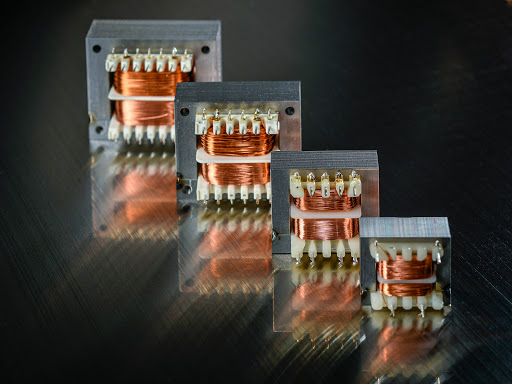
The basic requirement is an identical voltage ratio (it should not differ by more than 0.5%).
The figure below shows an arrangement of two single-phase transformers and the circulating current loop that will flow in the secondary windings when the voltage ratios differ.
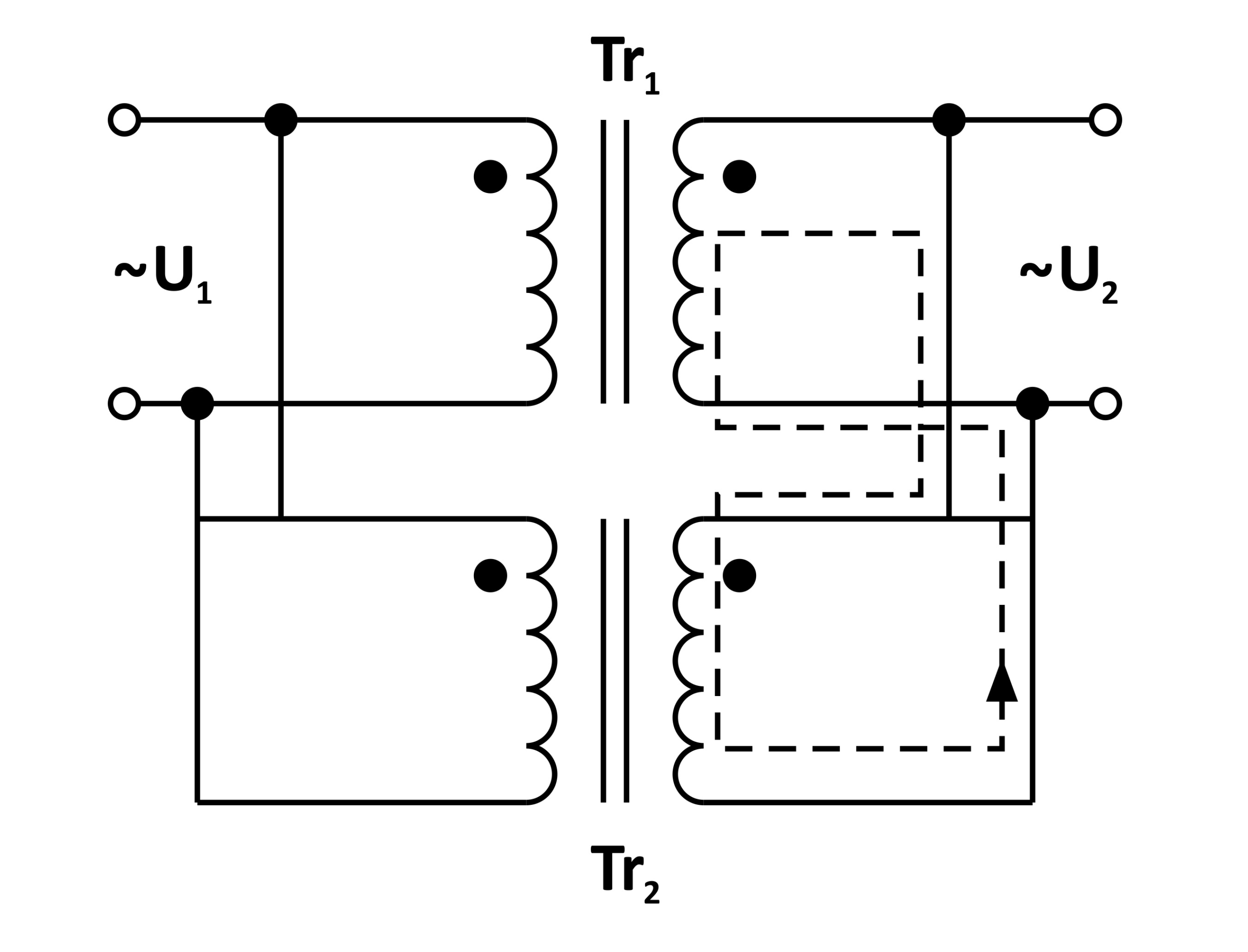
This will happen even when no load at all is connected to the secondary side of the transformer set.
If the transformer voltages differed too much, the circulating current could very quickly reach high values, making it practically impossible to supply the load, or it could even exceed the rated values, leading to destruction of the transformers.
A further requirement for parallel operation is: the same vector group.
For a single-phase arrangement this means correctly connecting the starts of the windings, so that the secondary-side voltages are combined in phase (otherwise the transformers will be damaged immediately or the protection devices will trip).
The final requirement is: proportional power sharing between the transformers. It will be met when the short-circuit voltages of the transformers, expressed as a percentage, do not differ by more than 0.5% and the ratio of the transformer ratings is no greater than 3:1.