The no-load condition of a transformer is a condition in which the transformer is supplied with primary voltage.
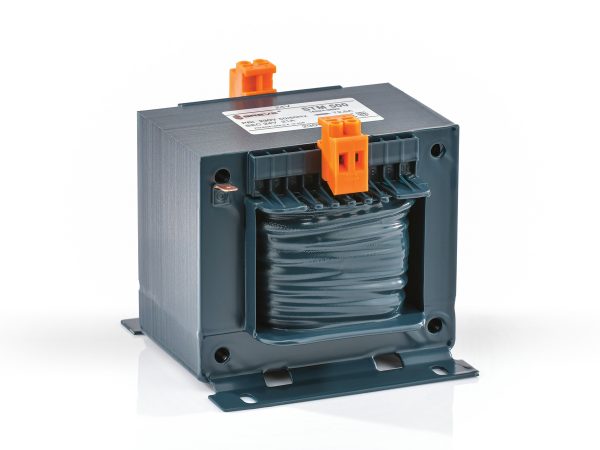
The terminals of the secondary winding remain open. In this condition the secondary-side current is equal to zero, while the primary-side current reaches a certain small value, the so-called no-load current, which is responsible for magnetising the core and for negligibly small losses in the resistance of the primary winding. The electromotive force induced in the secondary winding does not produce any secondary current, so no voltage drop appears across the resistance of the secondary winding.
To sum up: the minimal voltage drop caused by the resistance of the primary winding and by the leakage reactance of the primary winding, together with the zero voltage drop on the secondary side, mean that in this condition the secondary voltage reaches its maximum value, while the primary-side current reaches its minimum.
It may be further concluded that the transformer draws only a small amount of energy from the mains, mainly for magnetising the core, and that the secondary-side voltage reaches its maximum value, knowledge of which — particularly in low-power transformers — is essential for designing power supplies.