We have already written about what the no-load condition of a transformer is, and we have taken a close look at its load condition.

Now we shall deal with another property – we take a closer look at the short-circuit test condition in a transformer.
The short-circuit test condition of a transformer is a condition in which the transformer is supplied with a voltage such that the rated current flows in the short-circuited secondary side.
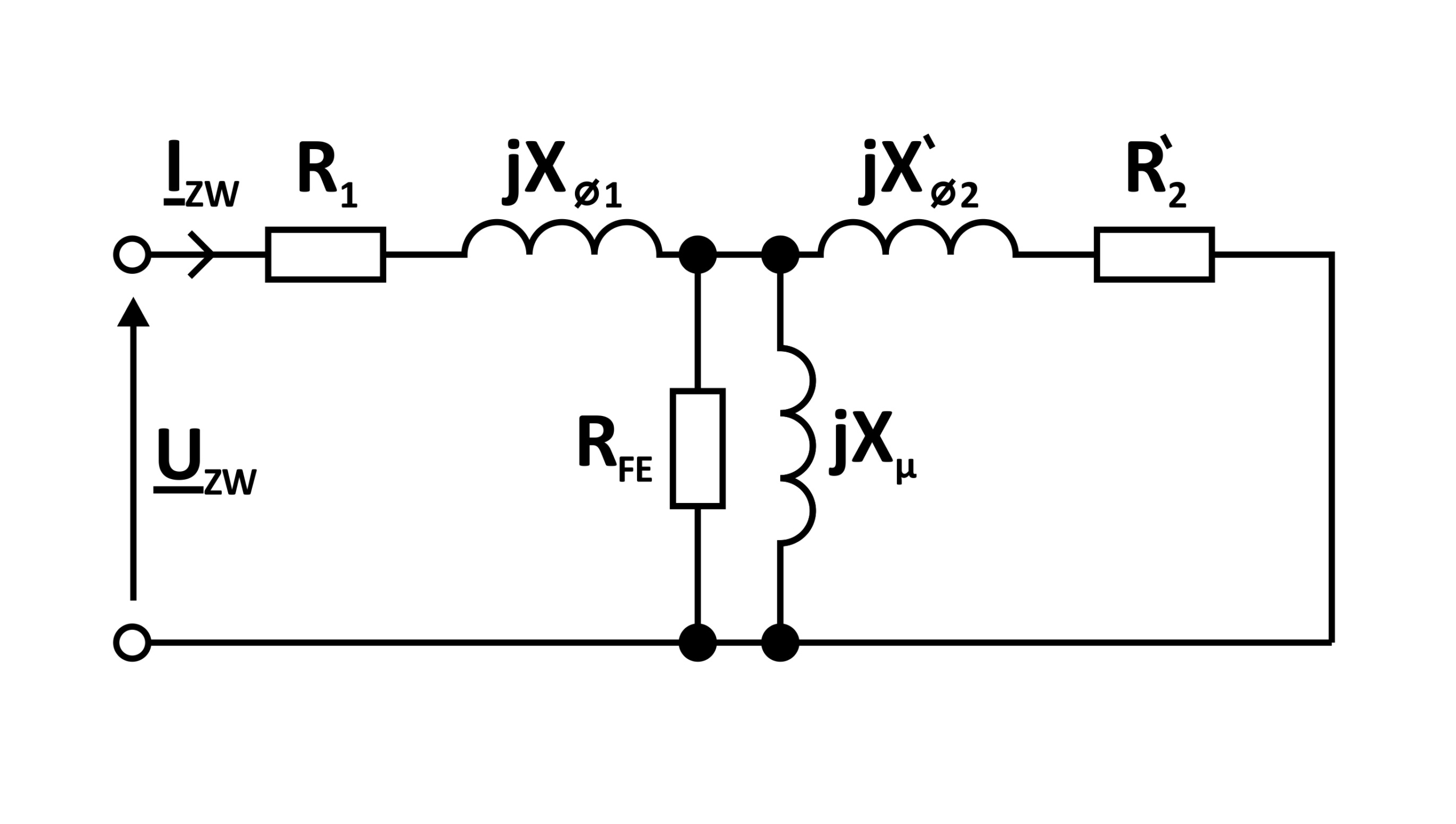
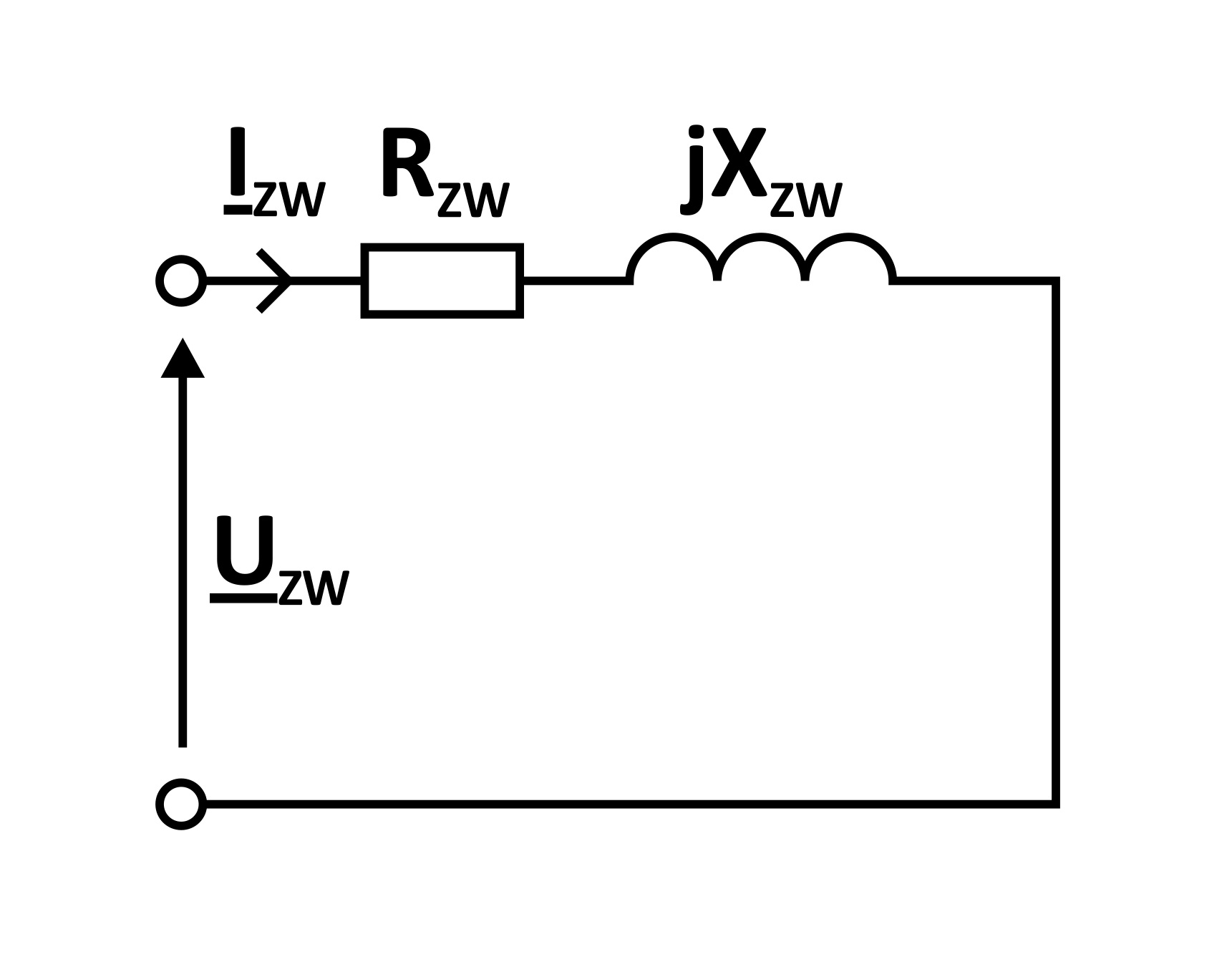
The supply voltage in this condition, known as the short-circuit voltage, is very low and reaches values from a few to a dozen or so per cent of the rated voltage. At such a low supply voltage, the current magnetising the core and the current responsible for the iron losses are negligibly small in relation to the rated current of the secondary side. Therefore, in this condition the losses in the winding resistances and the leakage reactances play the principal role. It is precisely these losses that are measured by the magnitude of the short-circuit voltage, which, as one of the transformer parameters, allows the current-voltage characteristic to be determined approximately. The short-circuit voltage also makes it possible to verify whether transformers can be connected in parallel operation.
The equivalent circuit for the short-circuit test condition is shown in the graphic below: